Video Marketing in India 2026: Winning with Reels, Shorts, and Short-Form Content
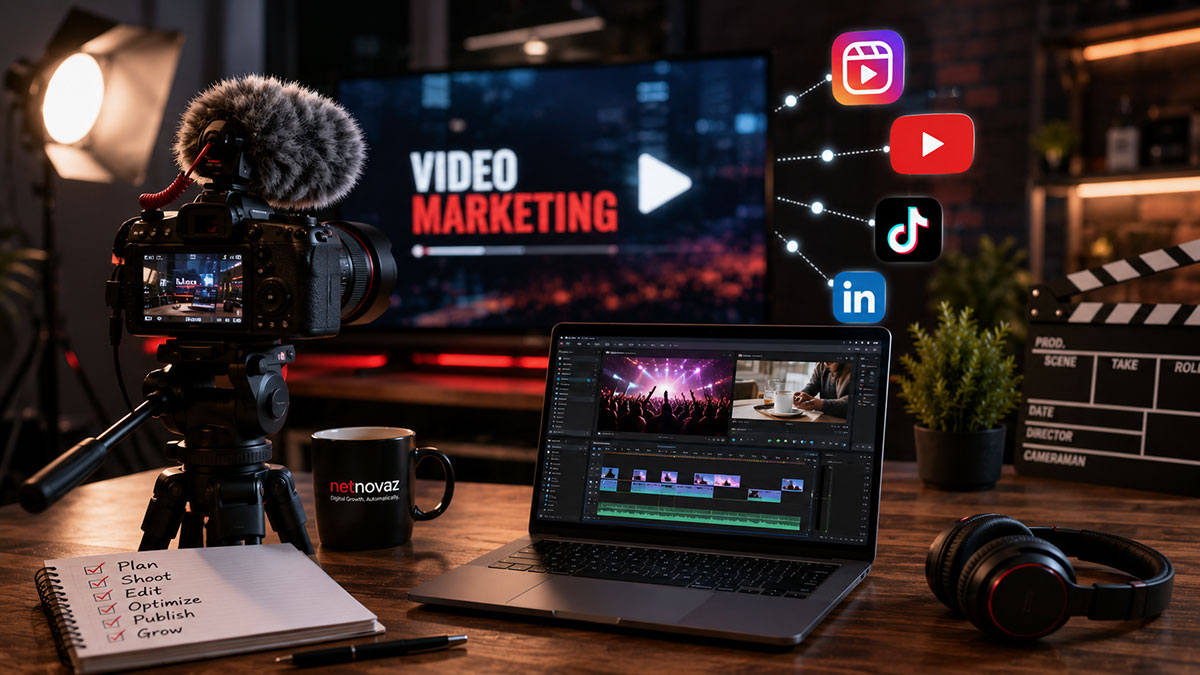
Organic reach on static image posts has been declining across every major platform for years, while short-form video keeps climbing. For Indian brands trying to build an audience without paying for every impression, that shift makes short-form video the single highest-leverage content format available in 2026 — on Instagram Reels, YouTube Shorts, and increasingly on LinkedIn.
The businesses winning at this aren’t necessarily the ones with the biggest production budgets. They’re the ones treating short-form video as a system — consistent output, clear formats, and fast iteration based on what actually performs — rather than a one-off campaign.
Why Short-Form Video Is Dominating Organic Reach
Platform algorithms in 2026 are built to reward watch time and completion rate above almost everything else, and short-form video is uniquely suited to earning both — a 20 to 40 second clip is far more likely to be watched in full than a static post is to be fully read. That completion signal tells the algorithm the content is worth showing to more people, which is exactly why Reels and Shorts routinely outreach every other content type on a brand’s account.
For Indian audiences specifically, short-form video also closes a trust gap faster than any other format — seeing a real person, a real product demo, or a real customer testimonial on video builds credibility that a polished graphic simply cannot match, particularly for service businesses and D2C brands competing against unfamiliar names.
Formats That Actually Work for Indian Businesses
Certain formats repeat across almost every successful business account regardless of industry: behind-the-scenes process videos (how a product is made, how a service is delivered), before-and-after transformations, quick educational tips relevant to the audience’s problem, and founder or team-led talking-head videos that put a human face on the brand.
Trend-jacking — using a trending audio or format — can boost reach quickly, but it works best when the trend is bent to fit the business’s message rather than used generically; a trending audio with no relevance to the brand tends to attract views without attracting the right audience.
Platform-Specific Strategy: Reels vs Shorts vs LinkedIn Video
Instagram Reels rewards fast hooks in the first two to three seconds and tends to favour lifestyle, visual, and emotionally resonant content — it’s the strongest platform for D2C, hospitality, fashion, and consumer brands. YouTube Shorts has a slightly longer attention runway and audiences that are more receptive to information-dense or tutorial-style content, making it a strong fit for education, home services, and B2B explainer content.
LinkedIn video, still underused by most Indian SMEs, rewards a more professional but still personal tone — founder insights, hiring wins, and client results perform disproportionately well because the competing content on the feed is mostly text, so video stands out simply by existing.
Building a Sustainable Production System
The businesses that sustain short-form video output over months, not just weeks, almost always batch-produce content — filming multiple videos in a single session rather than trying to create daily. A simple monthly system works well: one planning session to map out ten to fifteen video concepts, one or two filming days to capture raw footage, and then editing and scheduling spread across the following weeks.
AI-assisted editing tools have also made it realistic for a small team to produce professional-looking short-form content without a dedicated editor — automated captioning, clip generation from longer footage, and background music selection can all be handled with modern editing workflows, freeing the team to focus on the ideas rather than the technical execution.