Does Your Indian SME Need a CRM? A Practical 2026 Guide
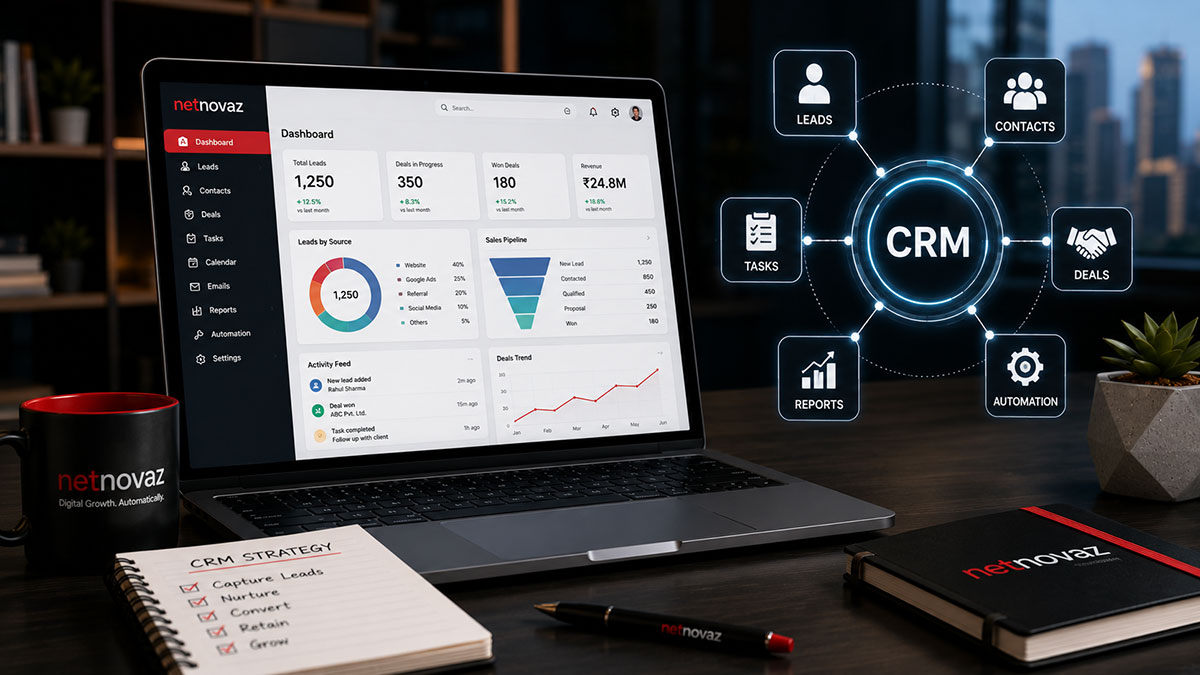
At some point, almost every growing Indian business hits the same wall: leads and customer details scattered across WhatsApp chats, Excel sheets, a notebook by the phone, and someone’s memory. Nothing is lost exactly, but nothing is easy to find either, and follow-ups slip through simply because there’s no system tracking who needs to be contacted and when.
That’s usually the moment a business owner starts googling CRM options — and immediately gets overwhelmed by dozens of SaaS tools, each claiming to be the best fit. This guide cuts through that noise with a practical framework for deciding whether a CRM is actually needed yet, and if so, whether an off-the-shelf tool or a custom-built CRM is the better fit.
The Signs a Business Actually Needs a CRM
Not every small business needs a CRM immediately, and adopting one too early can add unnecessary process overhead. The clearest signal that a CRM is genuinely needed is when leads or customer follow-ups are being missed — someone meant to call a lead back and simply forgot, or a customer’s purchase history lives only in one team member’s head and disappears when that person is unavailable.
A second strong signal is team growth — once more than one or two people are handling sales or customer conversations, a shared system of record becomes essential simply to avoid duplicate outreach or conflicting information being given to the same customer by different team members.
Off-the-Shelf SaaS CRM: When It Makes Sense
Established SaaS CRM platforms offer a genuine advantage for businesses with fairly standard sales processes — lead capture, follow-up stages, deal tracking — since these platforms have already built and refined that functionality across thousands of customers. Setup is typically fast, and monthly subscription pricing keeps the upfront cost low.
The trade-off is flexibility. Most SaaS CRMs are built around a generic sales process, and Indian businesses with workflows that don’t fit that generic mould — heavy WhatsApp-based sales, industry-specific stages, integration with local payment or logistics providers — often end up working around the tool’s limitations rather than the tool working for them, and can hit unexpected costs as user counts or feature tiers scale up.
Custom CRM: When It’s Worth Building
A custom-built CRM makes sense once a business has a distinctive process that a generic tool fights against, or once the monthly per-user SaaS cost at the business’s actual team size starts approaching what a one-time custom build would cost over a comparable period. It’s particularly compelling for businesses whose sales process is heavily WhatsApp-driven, since a custom CRM can integrate directly with the WhatsApp Business API in a way most off-the-shelf tools only support superficially.
The other advantage of a custom CRM is data ownership and integration depth — it can be built to connect natively with existing tools (accounting software, inventory systems, marketing automation) rather than relying on third-party integrations that may be limited, unreliable, or require a higher-priced subscription tier to unlock.
A Practical Decision Checklist
Before committing to either path, it’s worth answering a few honest questions: Is the sales process standard enough that a generic tool would fit with minimal workarounds? Is the team size and expected growth rate going to make per-user SaaS pricing expensive within the next year or two? Does the business rely heavily on WhatsApp or another channel that off-the-shelf CRMs support poorly? And is there a realistic in-house or agency resource to build and maintain a custom system if that route is chosen?
Businesses answering ‘standard process, small team, short-term need’ generally do best starting with an established SaaS CRM and revisiting the decision as they scale. Businesses answering ‘distinctive process, WhatsApp-heavy, expecting real growth’ more often find a custom CRM pays for itself faster than expected.